LABIATAE. 'BASIL'. Aromatic tender annuals grown in the herb garden for their value as seasoning and fragrance. The leaves are widely used in sauces and soups, the flavor blending particularly well with tomatoes. The clove-like fragrance has been considered soothing, and a cure for nervous headaches. Basil tea is said to calm an upset stomach. Start seed indoors 6 - 8 weeks before last frost, and plant out after all danger of frost is past. Thin to 6" apart. Basil likes full sun, and all types do well in pots. Harvest fresh leaves anytime. For drying, cut just before it reaches full bloom. Seed viable 8 - 10 years. Germinates in 1 - 4 weeks.
—Ocimum americanum 'Lime'. (500) OCIM-1LI. Packet: $2.50
Ounce: $7.50, 1/4 Pound: $18.00
'LIME BASIL'. Has a zesty lime flavor.
—Ocimum Basilicum 'Cinnamon'. (1000) OCIM-1C. Packet: $2.50
Ounce: $9.00, 1/4 Pound: $22.00
'CINNAMON BASIL'. Spicy aroma, purple flowers, to 30". A fine variety. Germinates in 1 - 4 weeks.
—Ocimum Basilicum 'Dwarf Greek'. (1000) OCIM-1DG. Packet: $2.50
Ounce: $7.50, 1/4 Pound: $20.00
Compact bushy plants with small, intensely fragrant leaves. Perfect for window-boxes and borders. Germinates in 1 - 3 weeks.
—Ocimum Basilicum 'Large Sweet'. (1000) OCIM-1S. Packet: $1.50
Ounce: $6.00, 1/4 Pound: $9.00
The most popular and widely grown variety. Sweet and aromatic 2 - 3" leaves. To 1 - 2 feet tall.
—Ocimum Basilicum 'Red Rubin'. (500) OCIM-1RR. Packet: $2.50
Ounce: $9.00, 1/4 Pound: $22.00
Dark purple-red leaves with a good flavor. Bushy plant to 18", a selection from Dark Opal, more compact and stays red longer into the summer.
—Ocimum Basilicum 'Siam Queen'. (500) OCIM-1SQ. Packet: $2.50
1/4 Ounce: $7.50, Ounce: $18.00
Info and photos: http://davesgarden.com/guides/pf/go/48849/
Flavorful Thai basil with an anise-clove flavor. To 14", with attractive dark flower spikes. AAS 1997. Germinates in 1 - 3 weeks.
—Ocimum gratissimum 'Green Pepper'. (100) OCIM-3P. Packet: $2.50
10 grams: $10.00 BULK OUT OF STOCK - packets are available
Pink-purple flowers and deep green leaves on a tender woody shrub to 2 feet. Strong pepper scent. Germinates in a week.
—Ocimum kilimandscharicum. (250) OCIM-14. Packet: $2.50
Ocimum kilimandscharicum cultivation in Kenya.
'KAPURI TULSHI', 'CAMPHOR BASIL'. White to light purple flowers. Tender shrub to 6 feet, with grey-green leaves with a strong camphor scent. E. Africa. Attracts bees. Used as a tea and medicinally in Africa and India. Germinates in 2 - 3 weeks.
—Ocimum sanctum. (1000) OCIM-24. Packet: $2.50 OTC ORGANIC SEED
1/4 Ounce: $10.00, Ounce: $30.00 NEW PRICE
'HOLY BASIL', 'TULSI'. Sweetly fragrant bushy perennial to 1 - 3 feet, grown as an annual in cold climates. Profuse purple or white bloom, and sometimes purplish-tinted foliage. Tropical Asia. Held sacred by the Hindus and grown around temples. Sections of the stem-bases are used in rosaries. The leaves are used in salads, and the oil is an effective antibiotic, and the leaves are used medicinally. Nice, distinctive clove-like flavor, good in cooking, salads, or for tea. Good in herb breads and herb butters. Good bee plant. Germinates in 1 - 4 weeks. Light and KNO3 helps. Organically grown.
NEW—Ocimum sanctum 'Purple Tulsi'. (400) OCIM-24P. Packet: $2.50
Gram: $7.50
'KRISHNA TULSI'. Sweet clove-like scent and taste. Tender perennial to 3 feet, with reddish purple leaves. Highly valued adaptogen in Ayurvedic medicine. Germinates in 1 - 6 weeks warm.
OENOTHERA (ee-NO-ther-a)
ONAGRACEAE. 'EVENING PRIMROSE', 'SUNDROPS'. Showy, sun-loving plants valued for their bright yellow, rose or white flowers. A large and wide ranging group of annuals, biennials and perennials, generally preferring sunny dry open ground. Easy from seed in ordinary soil. Start in March, germinates in 1 - 3 weeks. Set out in May. Some are tall upright plants, others stemless, a few, trailers. The 'evening primroses' open in late afternoon with startling rapidity and attract nocturnal moths. The 'sun drops' open in the daytime. The flowers are often delicately perfumed. The perennials make nice clumps with age. They are variable and prone to mutation, and have been used in studies of evolution. The genus name is said to come from the Greek meaning 'wine-scenting' or 'wine-hunting', referring to the ancient use of the roots to flavor wine, or the more recent use of the roots of O. biennis eaten after meals with wine, as olives are today. They have a history of edible and medicinal use, and are the object of current research. The oil of the seed of O. Lamarckiana, biennis and others contains gamma-linolenic acid, (GLA) formerly found in substantial amounts only in human milk. GLA is involved in biosynthesis of prostaglandins, and there have been many claims for its effectiveness in treating a variety of ailments from obesity to hangover, high serum cholesterol, schizophrenia, and multiple sclerosis.
—Oenothera biennis. (500) OENO-7. Packet: $2.50
Ounce: $7.50, 1/4 Pound: $15.00
'EVENING PRIMROSE'. Sweet-scented lemon yellow 1 - 2" flowers open in the evening. Hardy biennial or annual to 3 - 6 feet, with large rosettes of lance-shaped basal leaves. E. N. America. Zone 3. The thick roots are edible, with a sweet, parsnip/salsify flavor, harvested at the end of the first season. Young leaves and shoots eaten as a potherb, the flowers added to salads, the young pods eaten, and the seed oil is rich in GLA. Surface sow, to germinate in 1 - 3 weeks.
—Oenothera Lindheimeri: See Gaura Lindheimeri.
—Oenothera longissima. (200) OENO-34. Packet: $2.50
'DESERT EVENING PRIMROSE'. Bright butter yellow 2 - 3" flowers fading to reddish, with long slender tubes. Biennial or perennial to 3 - 4 feet, with a rosette of 8" leaves. Southwestern deserts. Germinates in 1 - 4 weeks warm.
—Oenothera rhombipetala. (1000) OENO-52. Packet: $2.50
5 grams: $7.50
'FOURPOINT EVENING PRIMROSE'. Large yellow flowers with four pointed petals, in long spikes, several flowers opening each evening, June and July. Biennial to 1 - 3 feet, forming a rosette the first year. Central U.S. Zone 3. Good in sandy soil. Very attractive flowers.
—Oenothera sp. BK10511.4 (100) OENO-SK. Packet: $3.00
Deep fiery orange flowers all along the stalk. Perennial to 1 - 2 feet, with narrow leaves blushed purple. Collected at 13,000 feet in the Bolivian Andes by Ben Kamm. "One of the nicest primroses we've met "—Kamm. Does well in California. Germinates in 1 - 4 weeks and up. For more seeds and plants grown by plant-explorer Ben Kamm, including many Andean rarities, see his website at www.sacredsucculents.com
"The only possible alternative to being either the oppressed or the oppressor is voluntary cooperation..."—Errico Malatesta.
ONOBRYCHIS (o-no-BRE-kees)
LEGUMINOSAE. Eurasian and African plants.
—Onbrychis viciifolia. (=Onobrychis sativa) (100) ONOB-25. Packet: $2.00
1/4 Pound: $7.40, Pound: $15.00
Agronomic info:
http://www.fao.org/ag/agp/AGPC/doc/gbase/data/pf000347.htm
http://www.feedipedia.org/node/703
Pictures: http://flora.nhm-wien.ac.at/Seiten-Arten/Onobrychis-viciifolia.htm
'SAINFOIN', 'HOLY CLOVER'. Pink 1/2" flowers with dark stripes, in 4" spikes. Hardy perennial to 2 1/2 feet, with pinnate leaves. Eurasia. Zone 3. Nitrogen-fixing and drought-resistant. Excellent bee plant, producing superior honey. As forage it protects ruminants against nematodes, increases protein utilization, and prevents bloat. Sow whole pods to germinate in 1 - 2 weeks.
OPUNTIA (o-PUN-sha)
CACTACEAE. Cacti ranging from British Columbia to the tip of South America. Most are 'prickly pears', with flat, oval pads, showy flowers, and red, yellow, or purple edible fruits. Fast growing and adaptable, some are hardy to 45°F below zero. Likes heat, sun, and good drainage. Seed often are helped by nicking, cold treatment, or fall sowing. Many germinate quickly with GA-3.
—Opuntia Engelmannii. (50) OPUN-86. Packet: $2.50
'CACTUS APPLE', TEXAS PRICKLY PEAR'. Bright yellow 2 - 3" flowers in early summer, followed by abundant edible dark purple 2" fruits. Large blue-green foot-long pads. Quite hardy, this seed collected in Zone 7 Tennessee. Germinates in 2 - 12 months.
—Opuntia Ficus-indica Mix. (25) OPUN-92X. Packet: $2.50
'CACTUS PEAR'. Large luscious fruits in orange, red, and green. Large mostly spineless pads, eaten young as nopales. Cultivated Mexican strains. "I burn the spines off the fruit, peel, blend and strain to make a delicious apricot-like nectar. It is easy to make a quart of this in the mornings for breakfast."—Martinez. Seedlings vary, select for spinelessness.
—Opuntia Ficus-indica Orange. (25) OPUN-92O. Packet: $2.50
—Opuntia Ficus-indica Red. (25) OPUN-92R. Packet: $2.50
—Opuntia Ficus-indica Green. (25) OPUN-92G. Packet: $2.50
ORIGANUM (o-RI-ga-num)
LABIATAE. Easily grown annual and perennial herbs popular for kitchen seasoning and ornament. Best in full sun and warm, dry, well-drained soil. Sow on the surface to germinate in 1 - 2 weeks or so. Seed viable 3 - 5 years. Classification a bit confused.
—Origanum Majorana. (1000) ORIG-30. Packet: $2.50
10 grams: $7.50
'SWEET MARJORAM'. Aromatic tender perennial to 2 feet. Tiny white or lilac flowers in summer. Zone 6. Much used in soups, stews, with meats, etc.
ORNITHOGALUM (or-ni-tho-GAL-um)
LILIACEAE. Widely distributed Eastern Hemisphere bulbs. The hardy kinds are fairly carefree and good for naturalizing and wild gardens. Tender species good in pots in the greenhouse or in California. As good as tulips and freesias in pots. Good cut flowers.
—Ornithogalum caudatum. (50) ORNI-6. Packet: $2.50
5 grams: $7.50, 25 grams: $30.00
Click for photo »


'PREGNANT ONION'. White starry 3/4" flowers in long racemes on snaky green stalks. Large above ground bulbs to 6" wide, which sprout small bulbs from the surface. Long fleshy leaves. South Africa. (=Albuca bracteata) Germinates in 2 - 4 weeks.
ORYCHOPHRAGMUS
CRUCIFERAE. Two species of Asian herbs.
—Orychophragmus violaceus. (300) ORYC-8. Packet: $2.50
Ounce: $9.00
'FEBRUARY ORCHID', 'CHINESE VIOLET CRESS'. Large violet 1 3/4" flowers in clusters, held above the foliage in spring. Annual or biennial to 1 - 2 feet. China. May winter over in Zone 7 or warmer. Grown in China for the leaves and flowers, eaten in salads or as a potherb. Germinates in 1 - 4 weeks.
OSMORHIZA (os-mo-REE-za)
UMBELLIFERAE. 'SWEET-ROOT'. Slender perennials rising from fleshy roots. Small white flowers. They prefer moist shady places. Fine plants for woodlands. The thick aromatic roots have been used medicinally and for food. Closely related to Myrrhis. Interesting plants worth growing.
—Osmorhiza longistylis. (100) OSMO-28. Packet: $2.50
10 grams: $7.50 BULK OUT OF STOCK - packets are still available
'ANISE ROOT'. Hardy, perennial to 2 - 3 feet, with attractive divided aromatic foliage and white flowers. E. N. America. The plant, especially the thick root, is strongly anise scented, and was eaten, used for flavoring and a tonic. Zone 4 or 5. Give seed a long prechill or sow in fall.
OXYRIA (ox-EE-ree-a)
POLYGONACEAE. Two species of hardy perennials.
—Oxyria digyna. (50) OXYR-4. Packet: $2.50
'MOUNTAIN SORREL'. Kidney-shaped leaves from pale green to blood red. Hardy perennial to 6", with sprays of small, often red flowers. Northern regions. Zone 2. The sour leaves are eaten raw or cooked, and are a good source of Vitamin C. They are also fermented like sauerkraut.
"True social harmony grows naturally out of solidarity of interest..."—Emma Goldman.
PAEONIA (pe-O-nee-a)
PAEONIACEAE. Hardy and long-lived perennials or shrubs from thick roots. The species come true from seed and are interesting to grow, blooming in about 3 years. Any soil, but dig deeply. Herbaceous kinds bloom best in cold climates. Sow spring to fall, root germinates in 1 - 8 months, top growth emerges the next spring. Year-old seed often germinates best. Always hold pot over at least one year in a moist shady spot. Seed viable 3 - 4 years, giving good germination.
—Paeonia lutea var. Ludlowii. (5) PAEO-52. Packet: $5.00
50 seed: $25.00, 100 seed: $40.00
Click for photo of seedlings »


'TIBETAN PEONY'. Golden yellow 3 - 5" wide flowers in May and June. Hardy shrub to 6 - 9 feet, with attractive divided leaves. Tibet. Zone 6. Sow in summer or fall, or give 1 - 3 months warm, then cold.
—Paeonia Mlokosewitschii. (10) PAEO-58. Packet: $3.50
'MOLLY THE WITCH' (a play on the name). Large clear yellow 4" bowl-shaped flowers in late spring. Hardy perennial to 3 feet, with blue-green foliage with good Tall color. Caucasus. Zone 6.
—Paeonia Single Garden Peonies. (20) PAEO-GX. Packet: $2.50
Ounce: $7.50
Seed from plants with large white, pink, and red single flowers. Sow in summer for top growth next spring.
—Paeonia suffruticosa. (10) PAEO-76. Packet: $2.50
Ounce: $12.00
'MOUTAN', 'TREE PEONY'. Rose-pink to white 6" wide flowers with a dark patch at the petal bases. Hardy shrub to 7 feet, with bipinnate foliage, blooming in May. Tibet and China. Zone 5. Cultivated since 700 AD, it became a rage in China in the 800s. Many varieties exist. Root germinates in 1 - 8 months, then needs cold or GA-3 to trigger leaves. Perhaps best sown in July or August. Year-old seed germinates best.
PAPAVER (PA-pa-ver or pa-PA-ver)
PAPAVERACEAE. Widely distributed annuals, perennials and sub-shrubs. Well-known garden favorites with brilliant showy flowers and attractive pods. Easily grown but many resent transplanting. Most like hot, sunny, well-drained spots. Sow on the surface, often germinating best at cool (50 - 60°F) temperatures. GA-3 improves many. Seed viable 3 - 25 years. It has been said that no other plants have eased so much human suffering, or caused so much, as the poppies. Most germinate in 1 - 4 weeks.
—Papaver alpinum Mixed. (200) PAPA-2X. Packet: $3.00
'ALPINE POPPY'. Fragrant 1 - 2" flowers in bright shades of yellow, rose, orange, and white. Very hardy tufted perennial to 10", with finely divided lacy foliage. Alps. Zone 5. Germinates in 2 weeks.
—Papaver Argemone. (500) PAPA-8. Packet: $2.50
Gram $6.00
'PRICKLY POPPY'. Dainty scarlet 1 - 2" flowers in summer, with black spots at the petal bases, followed by prickly 3/4" long pods. Hardy annual to 1 1/2 feet, with ferny leaves. Mediterranean.
—Papaver dubium. (500) PAPA-15. Packet: $2.50
Click for photo »


'LONG-POD POPPY'. Red to rose 2" flowers with darker centers. Hardy annual to 2 feet, with pinnately divided leaves. Eurasia. Naturalizes well.
—Papaver orientale 'Beauty of Livermere'. (=P. bracteatum) (100) PAPA-30L. Packet: $2.50
Large, deep glowing crimson-red flowers. To 3 feet. Zone 3. Said to be a good choice for thebaine production. Germinates in 1 - 2 weeks.
—Papaver orientale 'Formula Mix'. (1000) PAPA-30X. Packet: $2.50
A fine formula mixture. To 3 feet. Zone 3.
—Papaver orientale 'Royal Wedding'. (100) PAPA-30RW. Packet: $3.50
Large pure white flowers with black centers, on a hardy perennial to 2 1/2 feet. Zone 3. Absolutely stunning and choice! Also called 'Black and White'.
—Papaver paeonyflorum 'White Cloud'. (500) PAPA-32W. Packet: $2.50
10 grams: $9.00, 50 grams: $25.00
Click for photo »


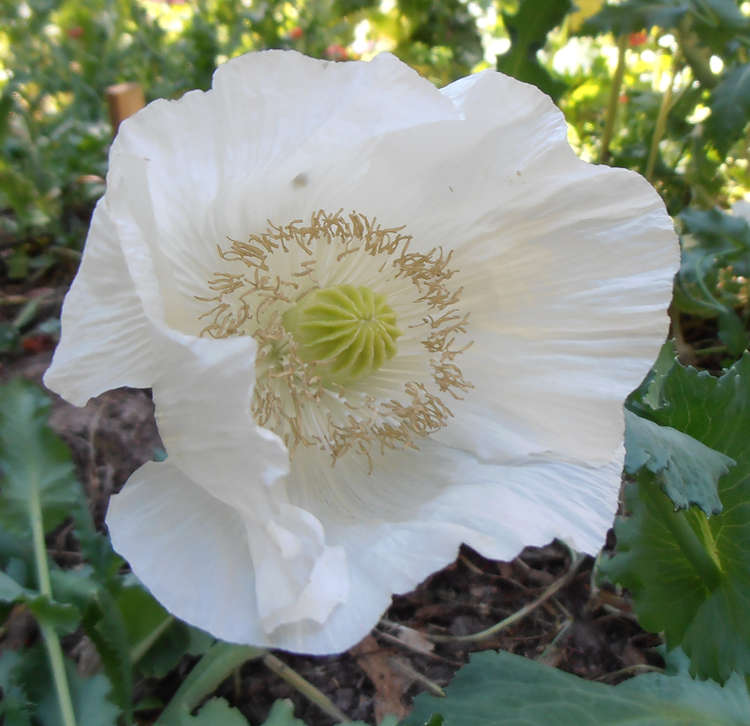
Large double white flowers with round petals, some semi-double, and a few single white. Hardy annual to 3 feet, with large ornamental pods. Nice! Germinates in a week.
—Papaver Rhoeas 'Mother of Pearl'. PAPA-38MP. Packet: $2.50
10 grams: $9.00, 100 grams: $70.00
Pastel shades of mauve, pink, white, grey, and lilac, some edged or blended, with delicate traceries of darker veins. Originally developed by Sir Cedric Morris of Suffolk.
—Papaver Rhoeas 'Single Shirley Mixed'. (10,000) PAPA-38SX. Packet: $2.00
Ounce: $6.00, 1/4 Pound: $18.00
Single flowered types in a range of colors. To 30".
—Papaver Rhoeas Wild Type. (1000) PAPA-38. Packet: $2.50
10 grams: $10.00
'CORN POPPY'. Striking deep cinnabar-red 2" flowers with a black blotch at the base of each petal. Hardy annual to 3 feet, with pinnately divided leaves. Eurasia. The original form of an important species with over 30 botanical varieties and innumerable horticultural forms. The seeds are used on cakes like ordinary poppyseeds, but have their own flavor. A fine oil is expressed from them, being valued like olive oil. The petals were made into a deep red syrup, used to color soups and other foods.
—Papaver setigerum 'Afghan Reselected'. (500) PAPA-43A. Packet: $2.50
10 grams: $10.00 BULK OUT OF STOCK - packets are still available
Click for photo »
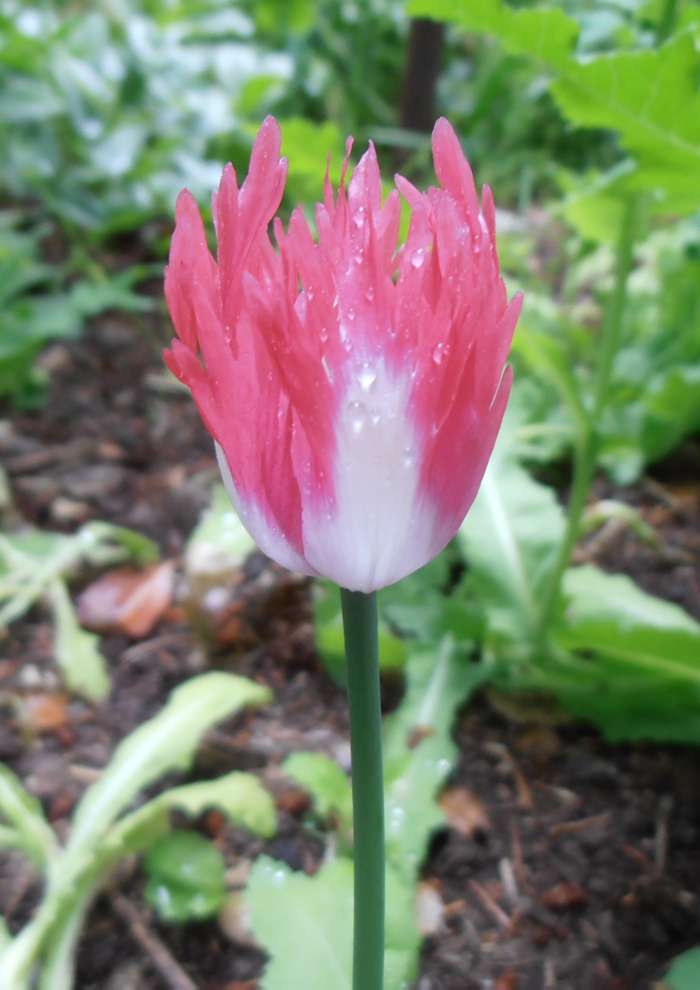
'AFGHAN POPPY'. A nice mix of forms, mostly a beautiful pink with white centers and laciniated petals. Some with round petals and gives some beautiful color variations like purple and scarlet. Nice! Annual to 3 feet. Originally from Afghanistan. I have reselected this to have a larger proportion of the better colors, and fewer pink. I hope you like it! A superior strain.
—Papaver setigerum 'Black Swan'. (750) PAPA-43BLS. Packet: $2.50
10 grams: $6.00, 100 grams: $30.00
Pictures:
https://secure.flickr.com/photos/billpusztai/7462271898/
http://davesgarden.com/guides/pf/showimage/326450/
Fully double flowers with fringed petals, in deep purple with wine tinges. Nice! Germinates in 1 - 3 weeks.
—Papaver setigerum 'Danebrog'. (1000) PAPA-43DB. Packet: $2.50
10 grams: $6.00, 100 grams: $25.00
Click for photo »
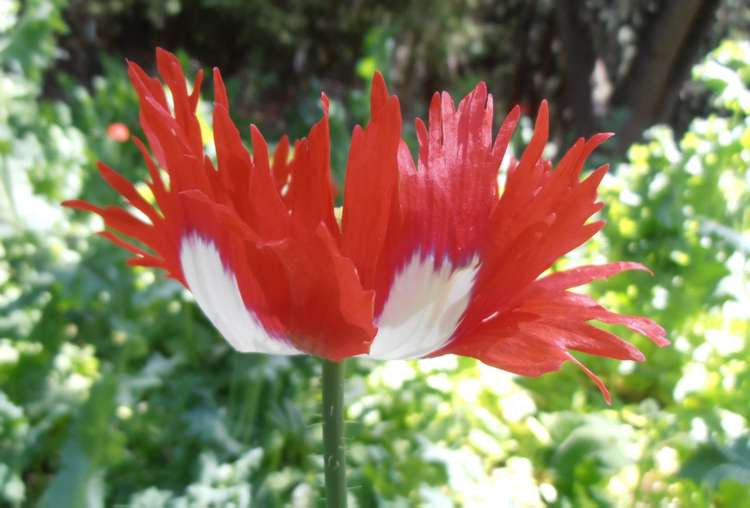

'DANISH FLAG', 'DANISH CROSS'. This is the famous variety with large, single, pure brilliant scarlet 3 - 5" flowers with a pure white cross in the center, and with fringed-edged petals. Hardy annual to 2 1/2 - 5 feet. Absolutely one of the most stunning poppies, this is an antique variety over 100 years old. My favorite. Germinates in a week or two.
—Papaver setigerum 'The Giant'. (=Giganteum) (1000) PAPA-43G. Packet: $2.50
(about 2400 seed per gram)
10 grams: $10.00, 100 grams: $60.00, Kilo: $450.00
Click for photo »
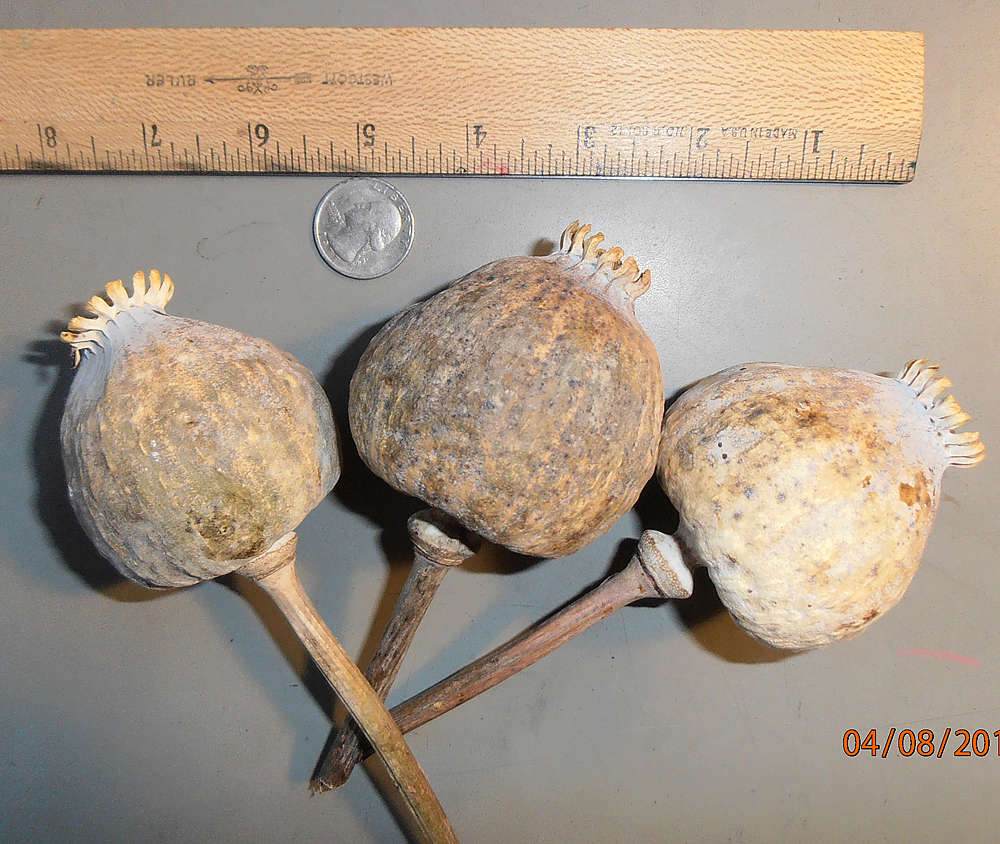
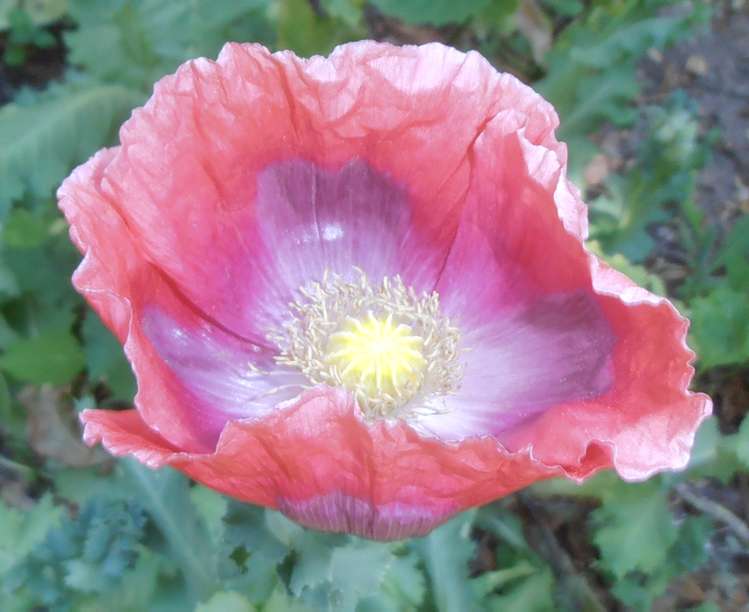
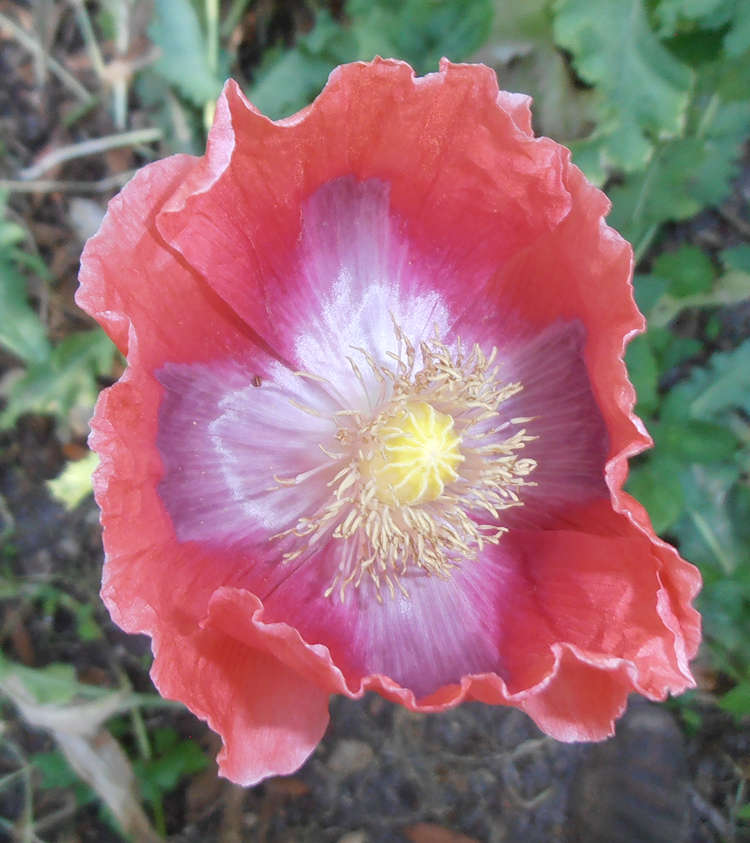
Specially-selected florist strain, developed for the huge pods used in dried arrangements. Large salmon-pink flowers with large purple and white cross. Hardy annual. Germinates in a week or so.
—Papaver setigerum 'Hen and Chickens'. (1000) PAPA-43HC. Packet: $2.50
10 grams: $6.00 (about 9500 seed), 100 grams: $20.00, 250 grams: $40.00
Click for photo »
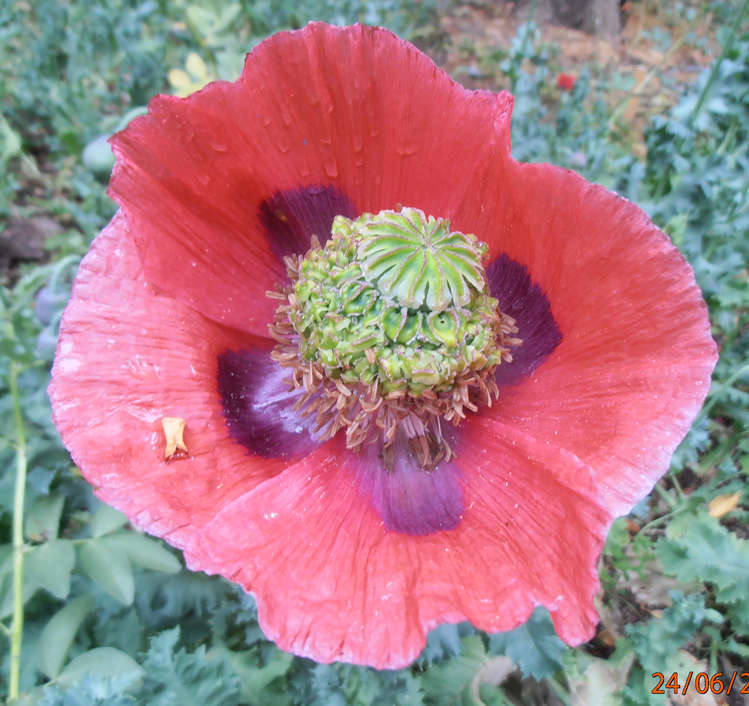
Odd pods with a large central pod surrounded at the base by several tiny pods, the 'mother hen and her chicks'. Unusual in dried arrangements. Produces a good percentage of the hen-and-chicks type pods, with some regular-type pods. Large salmon-red flowers with purple cross. Annual to 3 - 5 feet. Germinates in 1 week.
—Papaver setigerum 'Lauren's Grape'. (500) PAPA-43L. Packet: $2.50
10 grams: $7.50, 100 grams: $50.00
Click for photo »
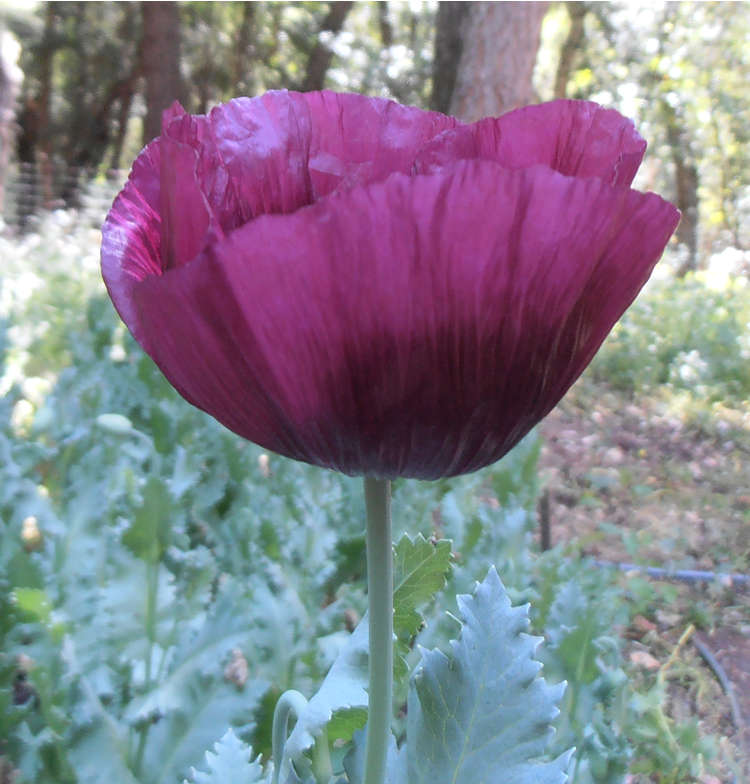
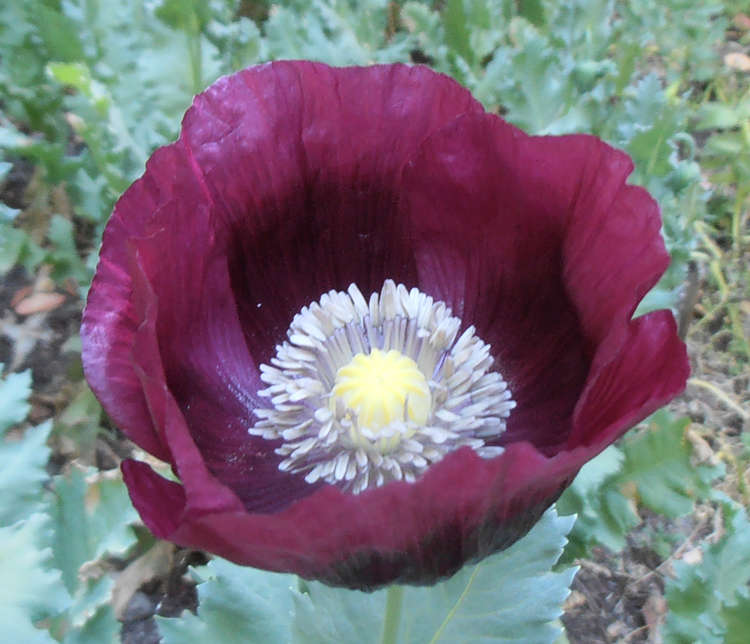

Large deep purple 4" flowers shading out to a lighter edge. Distinctive small round handsome pods. Hardy annual to 5 feet, with a large number of flowers per plant, and attractive, superior pods. Multiple flowers per plant - we've had over twenty on one plant. Seed needs a few weeks prechill, or sow in fall.
—Papaver setigerum 'Lilac Pompon'. (1000) PAPA-43LP. Packet: $2.50
10 grams: $6.00, 100 grams: $30.00
Picture: http://www.pinterest.com/pin/168533211028395317/
Large fully double flowers with fringed petals, in a nice lilac shade. Germinates in 1 - 3 weeks.
—Papaver setigerum 'Long Pod'. (500) PAPA-43LC. Packet: $2.50
Click for photo »
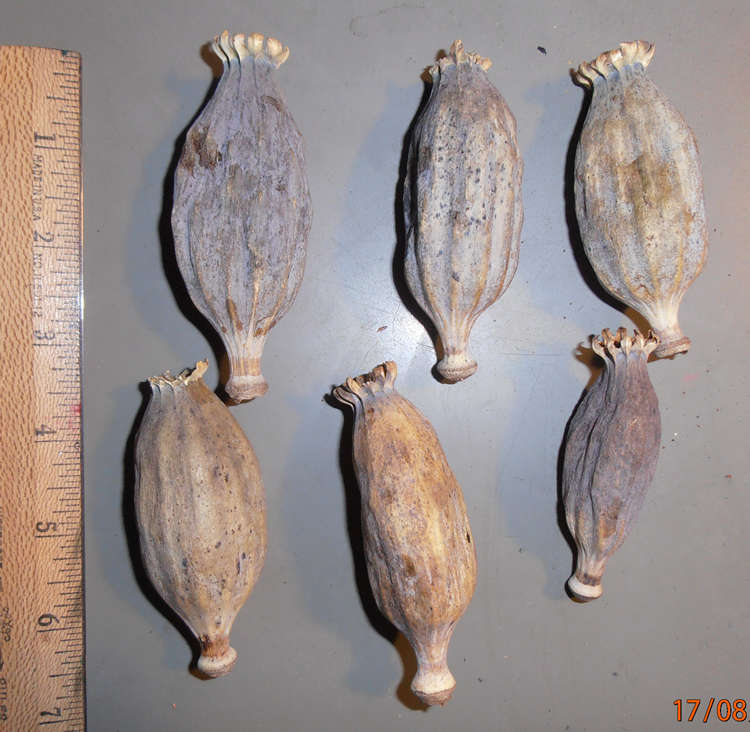
Striking long pods about 3" long and an inch wide. Unusual and excellent for the dried floral market. May include some round forms. Germinates in 1 - 3 weeks.
—Papaver setigerum 'Morpoppy Mix'. (500) PAPA-43MX. Packet: $2.50
10 grams: $7.50 BULK OUT OF STOCK - packets are available
A nice strain with extra large plants and a variety of color forms, varied petal and pod shapes, and even a few pods blushed purple.
—Papaver setigerum 'Pepperbox'. (1000) PAPA-43PB. Packet: $2.50
25 grams: $7.50, 50 grams: $15.00, 250 grams: $60.00 NEW PRICE
Click for photo »
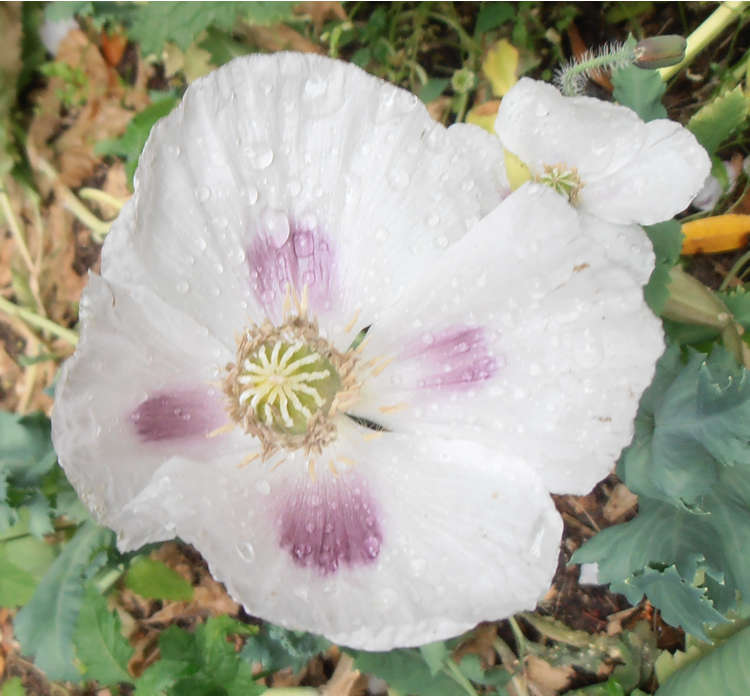
Handsome large pods which open when ripe to shed the seed, providing a dual crop, edible seed plus pods for the dried flower market. Large white flowers with light purple cross. Annual to 3 - 5 feet with bristly stems. Germinates in 1 week.
PARADISEA (par-a-DI-see-a)
LILIACEAE. Two lily-like species from Europe.
—Paradisea lusitanica. (25) PARA-8. Packet: $2.50
White 3/4" lily-like flowers in May and June. Robust hardy perennial to 2 - 5 feet, with strap-like 3/4" wide leaves. Thick roots. Portugal. Zone 7.
PASSIFLORA (pass-i-FLO-ra)
PASSIFLORACEAE. Showy tropical tendril-climbing vines grown for the unusual flowers and often edible fruits. Good in the greenhouse. Best in a rich fibrous soil and given plenty of manure and water while growing. Warm temperatures and nicking the seed often helps germination. Often a day or so of 110 - 120°F may trigger germination.
—Passiflora mollissima. (10) PASS-29. Packet: $3.00
5 grams: $40.00
Click for photo »
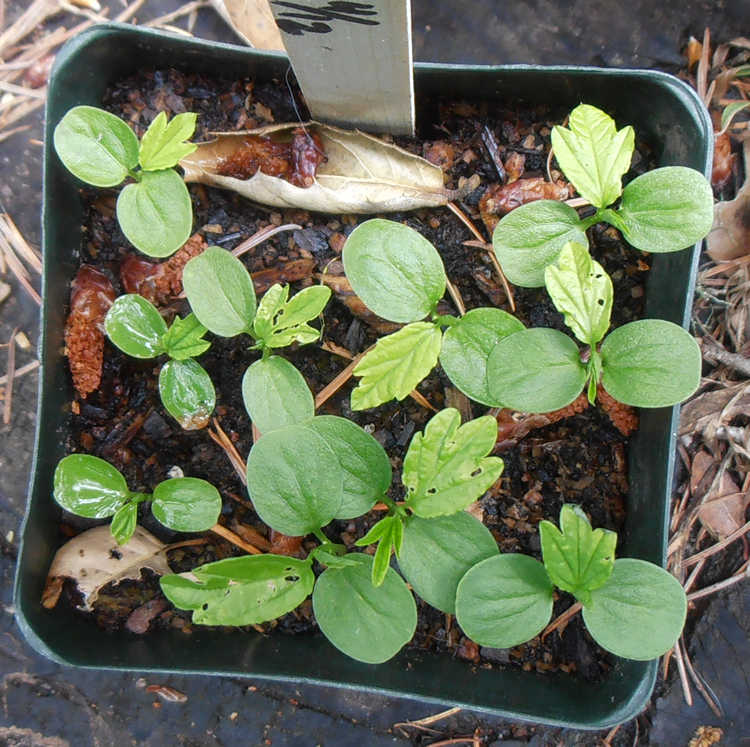
'PINK BANANA PASSIONFRUIT'. Rampant evergreen climber, with soft green, deeply 3-lobed foliage. Pendant, long-tubed, 3" wide pink or rose flowers up to 5" long. Yellow 3" edible fruits. Andes. Zone 8. Extremely fast growing, good for quick cover. Germinates in 3 - 12 weeks.
PAULOWNIA (pa-LOW-nee-a)
BIGNONIACEAE or SCROPHULARIACEAE. Ornamental Chinese deciduous trees somewhat resembling Catalpa, grown for their large, showy clusters of beautiful foxglove-like flowers. Best in deep loam in mild climates, will thrive and flower as far north as New York, and are root hardy to Montreal. Excellent shade trees. Very fast growing when young, and used as pulp, cabinet and firewood. Easy from seed. Sow on the surface as light helps. Germinates in 2 - 3 weeks (up to 20 weeks). Seed gives high germination for more than 4 years.
—Paulownia tomentosa. (=imperialis) (1000) PAUL-4. Packet: $2.50
Ounce: $9.00
Click for photo »

'EMPRESS TREE', 'ROYAL PAULOWNIA'. Showy, fragrant, 2" long, pale violet-blue foxglove-like flowers striped yellow and spotted inside, in large upright pyramidal clusters to 10" long in April and May, before the leaves have fully emerged. Top-shaped pods. Large, tropical-looking velvety foot-long leaves. Fast growing to 30 - 70 feet. China. Zone 5. The wood is used for cabinetry, fenceposts and houses in China, where the flowers are fed to swine to fatten them, and the tree has many medicinal uses, and the leaves are used to wash hair to restore its color and thickness. Germinates in 2 - 3 weeks, best with light.